Wichita & Sedgwick County, KS
Roof Repair in Wichita, KS
You call three roofers about one small leak. All three say you need a whole new roof.
Roof repair means fixing a specific problem on your roof, like a leak, missing shingles or damaged flashing, without replacing the whole thing. It’s the right call far more than the sales pitch lets on.
Below, you’ll see how to find a roofer who’ll do the repair, what roof repair costs, how to find a leak, what to do tonight if water’s coming in, and how to tell when a repair stops making sense. Leaking now? Skip to what to do right now.
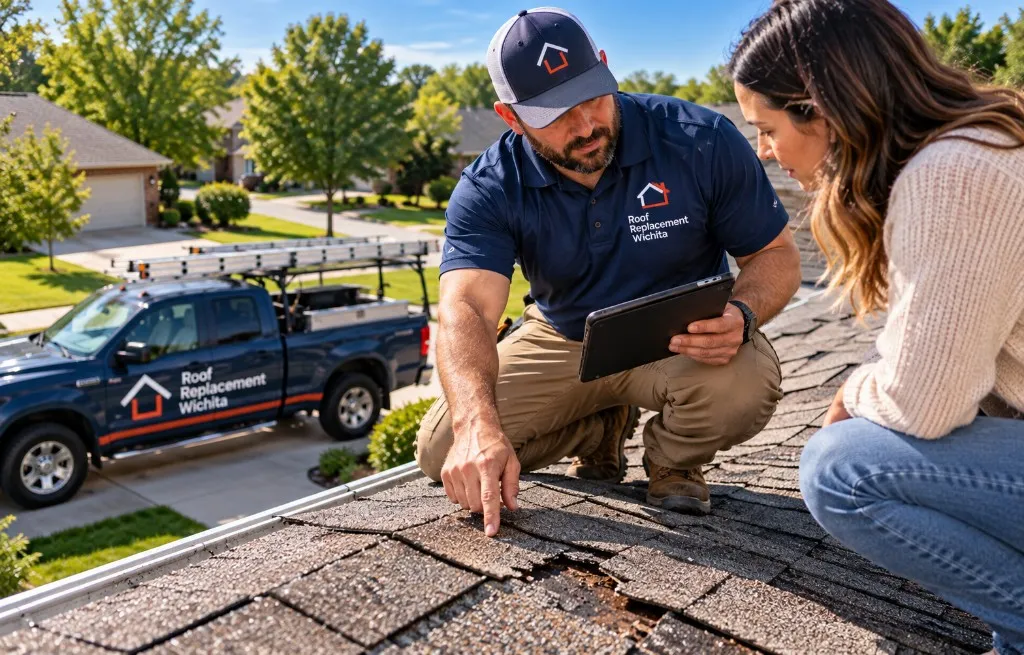
Who does small roof repairs in Wichita?
Look for a Wichita roofer who takes repair jobs, is registered with the Kansas Attorney General, and shows photos of the problem before quoting. Ask up front whether they do repairs or only replacements. A roofer who won’t quote the repair isn’t your roofer.
That’s the most common complaint in homeowner threads, word for word: “No one wants to do repairs, they all just want to replace the whole thing.” A Wichita homeowner on r/wichita said several companies weren’t interested unless it was an insurance job.
Here’s how to find a roofer who’ll take the roof repair:
- Ask on the first call: “Do you do small repairs, like one leak or a few shingles?”
- Check registration in the Kansas AG Roofing Registration Directory.
- Ask for photos of the damage before any price.
- Get the repair quote in writing, even if they also quote a replacement.
- Ask about the repair warranty. Good roofers stand behind a patch too.
Asking “who are some reputable roofers in Wichita?” gets you names. Asking these five questions gets you the right one.
How much does roof repair cost?
Rhoden Roofing, a Wichita roofer, puts a typical roof repair at $750 to $2,500. National guides price small jobs lower: $200 to $500 for a few shingles, $400 to $1,200 for a leak. Source, access and water damage move the number.
| Repair job | Published range |
|---|---|
| Replace a few missing shingles | $200–$500 (SquareDash, national) |
| Replace a pipe boot | $150–$400 (SquareDash, national) |
| Repair a valley | $350–$600 (RoofCalc, national) |
| Replace flashing at a chimney, skylight, vent or wall | $300–$800 (SquareDash, national) |
| Find and fix one leak | $400–$1,200 (SquareDash, national) |
| Typical repair in Wichita | $750–$2,500 (Rhoden Roofing) |
| Past repair: damage across several slopes | Get a replacement quote; see the cost page |
Past about $3,000 in roof repair costs, compare against a full replacement. Our roof replacement cost guide shows the math by roof size.
Are roof repair estimates free?
Yes, from several Wichita roofers. Dingers Roofing and Equity Builders advertise free inspections, and Equity gives a written, itemized estimate after the visit. A free estimate should still include photos of the problem and a written price.
How do you find where a roof leak is coming from?
Roof leaks rarely drip right under the hole. Water runs along boards and rafters first. Start in the attic during or right after rain, trace the wet trail uphill, and check the usual suspects: flashing, pipe boots, valleys, vents and skylights.
Here’s where leaks come from, and the roof repair each one needs:
| Where you see water | Likely source | Typical fix |
|---|---|---|
| Ceiling near a chimney | Chimney flashing or counter-flashing | Reflash, not caulk |
| Around a bathroom or kitchen vent pipe | Cracked rubber pipe boot | Replace the boot |
| Where two roof slopes meet | Valley damage or worn ice and water shield | Repair the valley |
| Near an exterior wall | Step flashing behind siding | Replace step flashing |
| Around a skylight | Skylight flashing or seal | Reflash or reseal |
| Random spots after wind | Missing or lifted shingles | Replace shingles |
| Stains after snowmelt | Ice backing up at the eaves | Ice and water shield, attic airflow |
| Near the ridge in winter | Attic condensation, not a leak | Fix ventilation |
That last row trips people up. One homeowner with a year-old roof found ceiling stains and water near the ridge, and part of the cause was attic condensation from bad vent connections.
People who’ve been through it agree on one thing: find the actual failure point before anyone decides the scope.
What should you do right now if your roof is leaking?
If your roof is leaking right now, catch the water, move valuables, and photograph everything. Don’t climb a wet roof. Call a roofer for an emergency tarp the same day. A tarp stops the damage from spreading and buys time for a proper repair.
The top community answer to “any DIY fix for a roof leak?” was one word: tarp.
Here’s the order that protects your house and your claim:
- Put buckets under drips and move furniture and electronics.
- Poke a small hole in a bulging ceiling spot to drain it into a bucket.
- Take dated photos inside and outside.
- Call a roofer for emergency roof tarping, and ask about same-day availability.
- Keep receipts for the tarp and cleanup.
- Schedule the permanent roof repair once the roof is dry.
Your policy expects you to prevent further damage once you know about a leak. A tarp is how you do that.
Should you repair or replace your roof?
Repair your roof when the damage is in one area, the roof is fairly young, and the shingles still bend without cracking. Replace it when damage covers several slopes, leaks keep coming back, or the shingles are brittle and bald. Age alone doesn’t decide it.
| Repair when | Replace when |
|---|---|
| Damage is on one slope or one spot | Damage covers several slopes |
| One leak with a clear source | Leaks keep returning in new spots |
| Shingles still flex when lifted | Shingles crack when a roofer lifts them |
| Granules mostly intact | Bare mat showing across the roof |
| Matching shingles are still sold | Your shingle line is discontinued |
| Repairs total a small share of a new roof | Repairs keep adding up |
Should a 20-year-old roof be replaced?
Not automatically. A 20-year-old roof in good condition can take a roof repair. But old shingles get brittle, and a repair that cracks the shingles around it isn’t a repair. Ask the roofer to lift a shingle near the damage and show you whether it bends or breaks.
Insurance matters here too. On an older roof with ACV coverage, a storm claim pays the depreciated value, so repair math and replacement math both change.
Does a second layer of shingles change the answer?
Yes. Roof repair gets harder with two layers, because the roofer has to work through both. When it’s time to replace, both layers come off.
Why do roofers push a full replacement for a small leak?
Roofers push replacements for four reasons: small repairs earn less, old brittle shingles crack when touched, matching shingles are gone, or the damage really is widespread. The honest ones show you which reason applies, with photos. The others just say “replace.”
A common complaint runs like this: one small attic leak, and several roofing companies recommend a full replacement. The homeowner goes looking for someone who specializes in leak detection and repairs instead.
Here’s the thing. Replacement is the right answer when the damage really is widespread. But you deserve to see why.
Ask any roofer who recommends replacement:
- “Can you show me photos of damage beyond the leak?”
- “What happens if you try the repair?”
- “What would the roof repair cost, in writing?”
If they can’t answer those, get another opinion. A roof inspection with dated photos settles it.
What if a bad repair came first?
Don’t hire the same roofer for the replacement. One homeowner described a visibly poor shingle repair on their father’s roof, followed by a roughly $31,000 replacement quote from the same company. A roofer who botched the small job hasn’t earned the big one.
Is roof restoration worth it?
Roof restoration can be worth it on a younger asphalt roof with no hail bruises, cracks or bald spots, when you want to buy time. It isn’t worth it on a hail-damaged, cracked or leaking roof, because treatments can’t replace granules or fix broken shingles.
“Roof restoration” in Wichita covers two things: roof repair on damaged areas, and spray-on rejuvenation treatments sold to extend a roof’s life.
Here’s what a treatment can’t do:
- Put back granules the roof already lost
- Close cracks or fix hail bruises
- Stop an active leak
- Fix flashing, pipe boots or valleys
Treatment makers say their products restore flexibility to aging shingles. The claims about extra years of life come from vendors and vendor-cited lab tests, not independent field data. Before paying for one, get a roof inspection first. If the inspector finds storm damage or leaks, fix those, and skip the spray.
Not sure whether your roof is past saving? Start with our roof replacement guide.
My new roof is leaking. Whose problem is it?
A leak in a roof only a few years old points to the installation, and it’s your roofer’s to fix under the workmanship warranty. Call the installer first, in writing, with photos. Nobody should patch it until the failure point is found.
Leaks in new roofs show up again and again in homeowner threads:
- Chimney and gable-end leaks a year after install
- A 1-year-old roof leaking at a solar conduit and where valley flashing meets step flashing
- A roof replaced in April 2025 with ceiling stains and bad vent connections
Here’s what to do:
- Photograph the leak and the roof area above it.
- Email the installer and ask for a warranty visit.
- Ask them to show you the failure point before they fix it.
- Get a second opinion if their explanation doesn’t hold up.
See what a good install looks like in our roof installation guide.
Will insurance pay to fix a roof leak?
Insurance pays to fix a roof leak when a covered event caused it, like hail or wind, and the damage beats your deductible. Leaks from age, wear or poor maintenance aren’t covered. Interior water damage from a covered leak is part of the same claim.
So the cause decides whether insurance pays for the roof repair. Hail cracked the shingles? That’s a claim. Old shingles wore out? That’s on you.
For storm damage, deductibles and adjuster disputes, see our hail damage roof guide.
What else do people ask about roof repair?
People ask how long a leak repair takes, whether they can fix a leak themselves, what a leaking roof costs to fix on average, whether hail damage can be repaired, and what the 25% rule means. Short answers to each are below.
Roof Repair FAQs
How much does it typically cost to repair a roof leak?
A typical leak repair runs $400 to $1,200, per SquareDash’s national guide. Leaks that damaged decking, or that come from several spots, move toward the $1,000 to $3,000 RoofCalc lists for major repairs.
How long does it take to fix a roof leak?
Small fixes like a pipe boot or a few shingles are short jobs. Flashing and valley repairs take longer. Ask for the time on site in the quote.
Can I fix a roof leak myself?
Only temporarily. Put a tarp on from a ladder if it’s safe, and call a roofer for the real roof repair. Don’t walk a wet or steep roof.
Can a hail-damaged roof be repaired?
Yes, when the hits are limited to a few shingles or one slope and matching shingles still exist. Widespread hail damage calls for replacement.
Will a roof repair void my shingle warranty?
Yes, if the repair uses mismatched products or poor methods. Use a registered roofer and keep the repair invoice with your warranty papers.
What is the 25% rule for roofing?
The 25% rule limits how much of a roof you can repair before the whole roof has to meet current code. It’s best known from Florida. Whether it applies in Wichita is a question for MABCD, the local building department.